Rising for Resilience: Reflecting on Our Journey and the Road Ahead (2025–2028)
19 June 2026By Dola Mohapatra
Rising for Resilience — RAHI Country Strategy Plan (2025–2028)
As we move through the implementation of our Country Strategy Plan (2025–2028), this is an important moment to pause, reflect, and reaffirm the direction we have set for ourselves. Over the past decade — and especially in the last year and a half — Rise Against Hunger India has continued to evolve from delivering immediate food support to enabling long-term, community-led solutions to hunger and malnutrition.
Our strategy is not just a vision on paper. It is already shaping how we work — with communities, partners, and volunteers — grounded in two powerful ideas: agency and resilience.
A Moment to Reflect
Eighteen months into this journey, a few things are clear:
Hunger is deeply interconnected with livelihoods, climate, access to services, and social structures.
Communities create sustainable change when they are active participants — not passive recipients.
Building resilience requires time, trust, and consistent engagement, not one-off interventions.
These insights reinforce our belief that sustainable impact lies in strengthening people's capacity to shape their own futures.
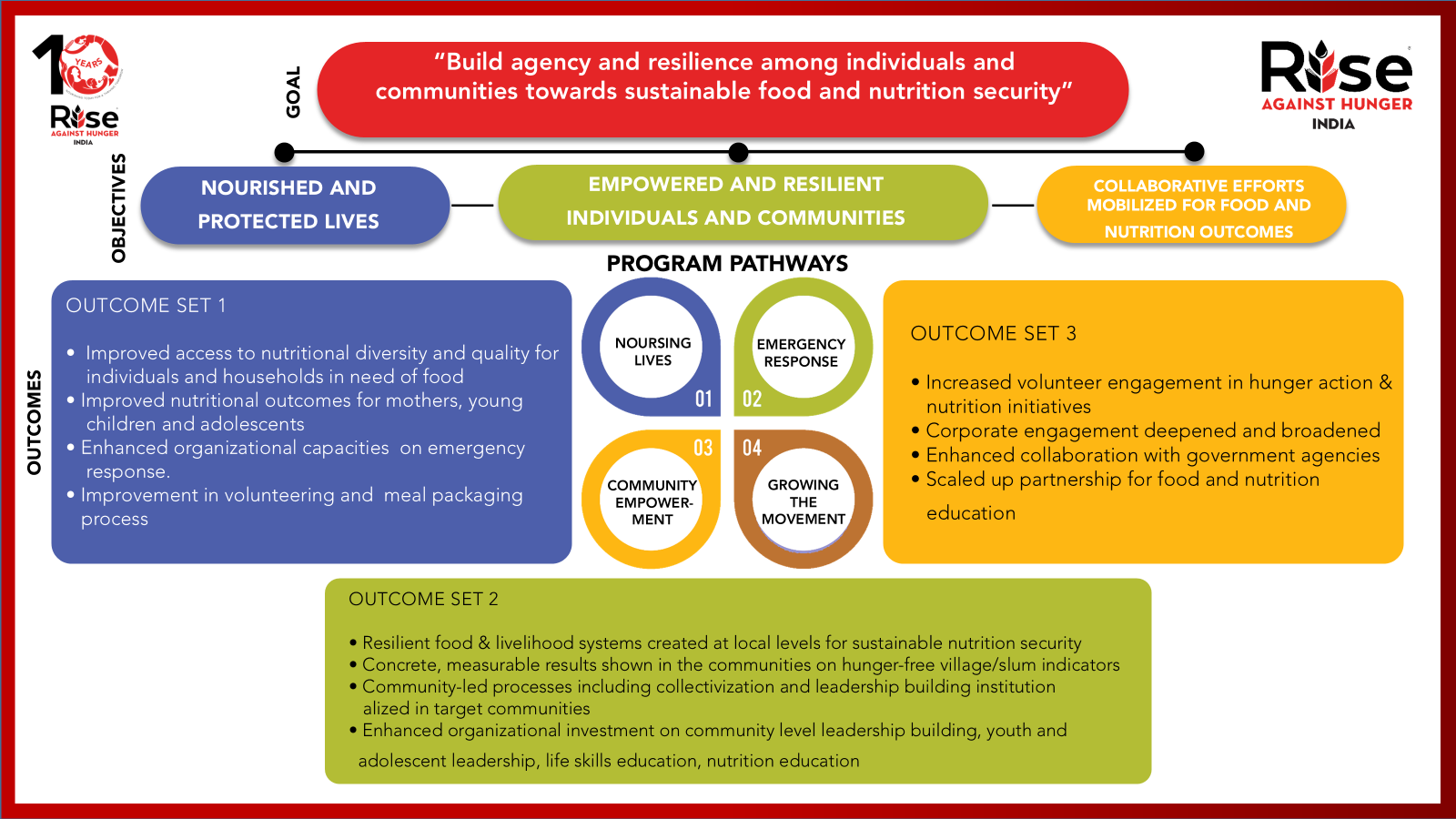
RAHI's Theory of Change: Program Pathways leading to Nourished Lives, Empowered Communities, and Collaborative Action
From Strategy to Practice: How the Vision is Taking Shape
While our long-term goals remain ambitious, early progress across program areas shows that the strategic direction we chose is both relevant and working.
1. Deepening Community-Centered Systems
Across our rural programs, the shift toward community-driven development is becoming more structured and measurable.
The Hunger-Free Village (HFV) framework is now guiding interventions in target communities.
Household-level baselines and data systems are strengthening accountability and decision-making.
This marks a strong step toward outcomes related to community ownership, accountability, and measurable impact.
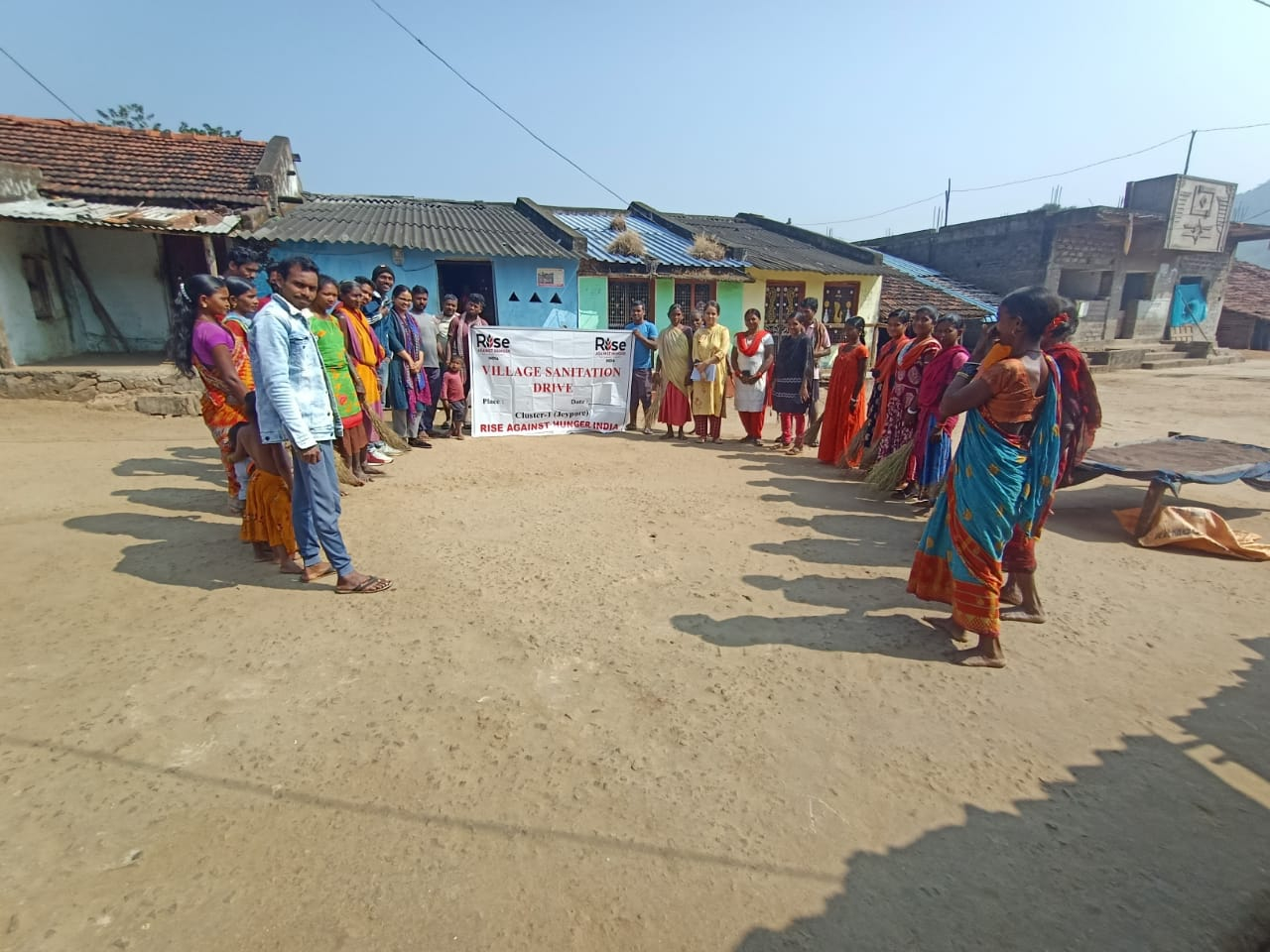
The Hunger-Free Village framework guiding community-centered interventions
2. Strengthening Local Leadership and Last-Mile Engagement
Our programs are increasingly anchored in local leadership.
Field-based cadres, community-level resource persons (CRPs), and facilitators are strengthening last-mile connections.
Communities are playing a more active role in identifying priorities and driving solutions.
This directly advances our goal of building agency — empowering communities to lead their own change.
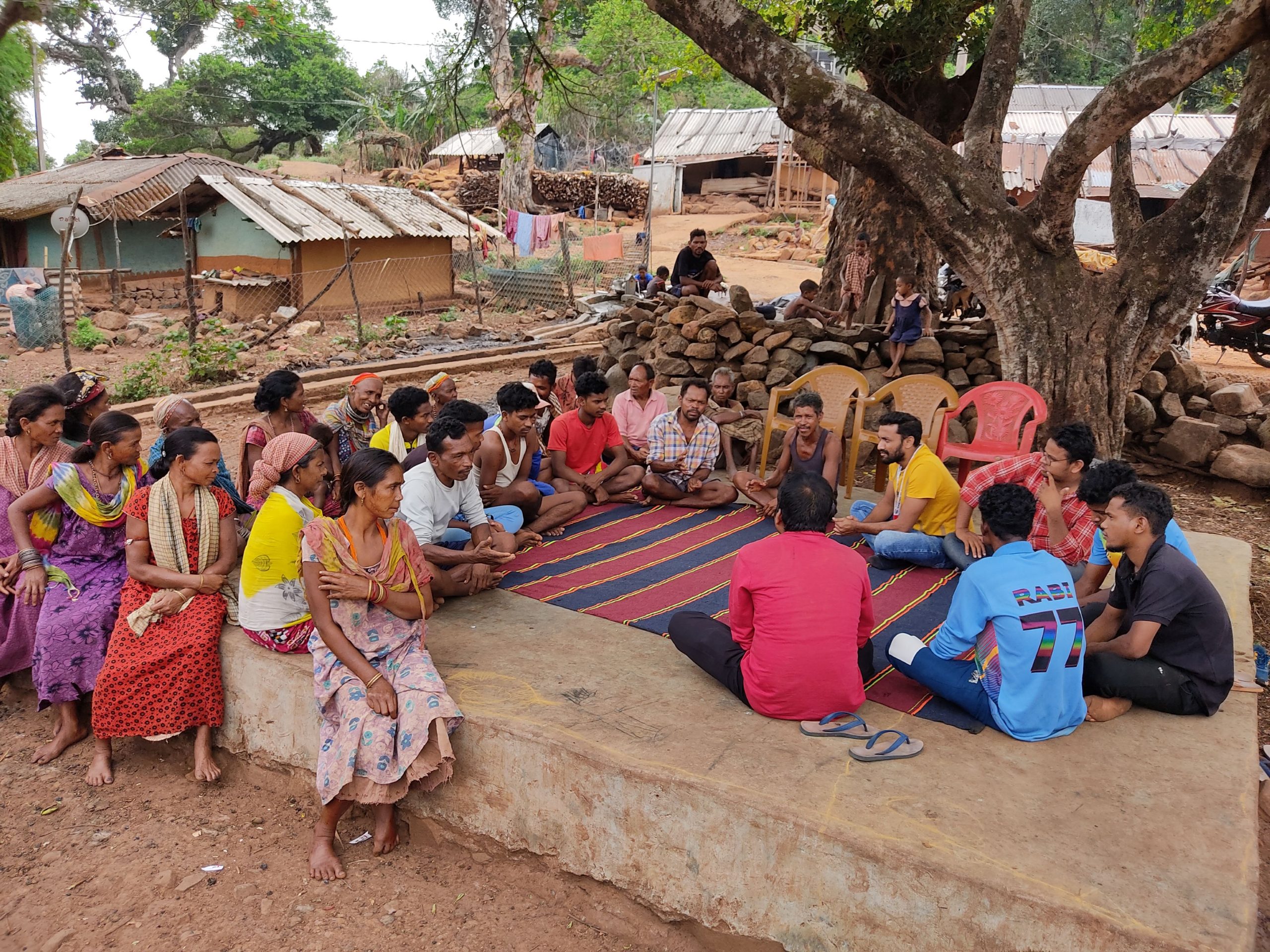
Community-level meetings empowering local leadership and decision-making
3. Expanding Engagement and Building a Movement
The "Growing the Movement" pillar is gaining strong momentum as we continue to broaden both participation and influence.
Volunteering opportunities have diversified — from meal packaging events to more immersive, community-based engagements
Engagement with academic institutions has expanded significantly, bringing a growing number of young people into the movement
At the same time, we are strengthening our role as a platform for knowledge and dialogue on nutrition:
Initiatives such as the Nutrition Everyday Podcast brought together nearly 20 leading experts in its first season, helping translate complex food and nutrition themes into accessible conversations
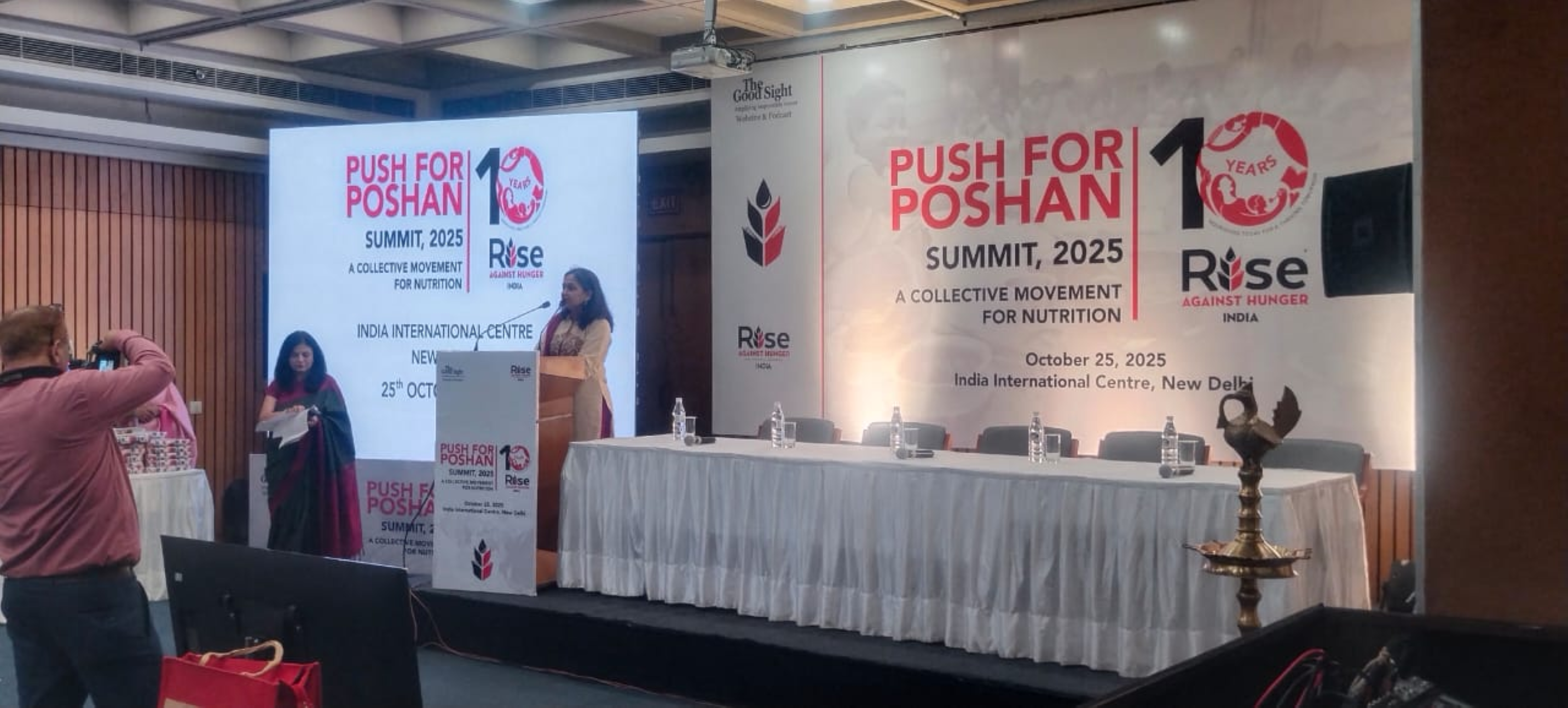
The Push for Poshan Summit, a day-long convening of practitioners and experts, generated strong engagement and attention around critical nutrition challenges
Push for Poshan Summit 2025 at India International Centre, New Delhi — A Collective Movement for Nutrition
These efforts are helping to amplify awareness, encourage informed choices, and build a stronger ecosystem of stakeholders committed to food and nutrition security.
4. Sharpening the Resilience Lens
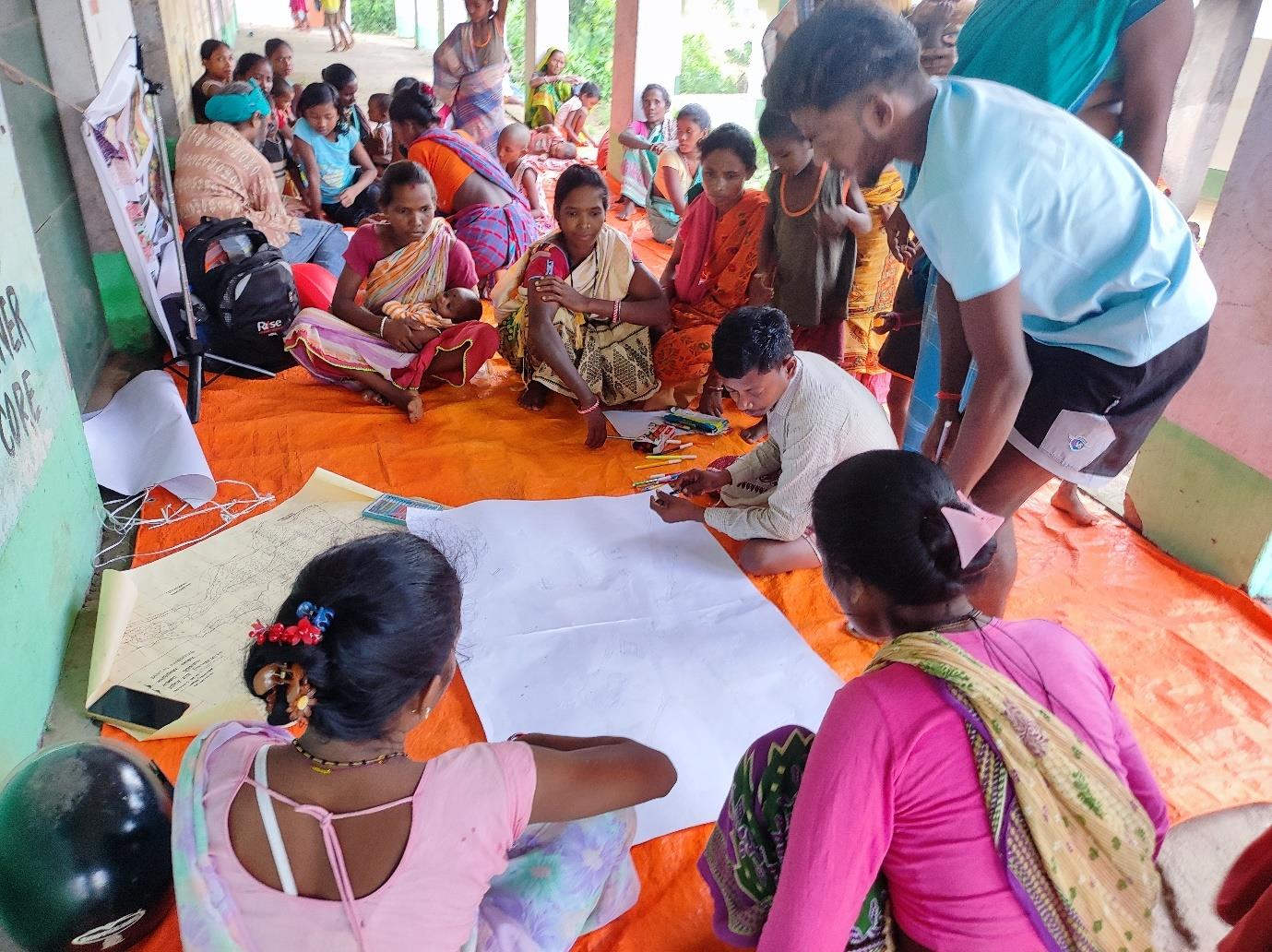
Our understanding of resilience has evolved significantly. Moving beyond disaster response, programs are now focused on strengthening household-level resilience.
Greater emphasis on helping communities anticipate, adapt, and cope with shocks — whether climate-related, economic, or health-driven.
This aligns with our long-term goal of enabling communities to sustain food and nutrition security despite adversity.
Community members collaborating to map hazards, risks, and resilience strategies
5. Early Progress in Nutrition and Behavior Change
Programs focused on nutrition and life skills are beginning to show encouraging results.
Nutrition education and life skills initiatives are expanding across partner organizations.
Flagship efforts in maternal and child nutrition are contributing to improved health-seeking behaviors and service access.
These outcomes support improved nutrition, better awareness, and long-term well-being.
Understanding the Bigger Picture
Hunger today is not just about access to food. It is about:
Nutrition awareness and dietary diversity
Livelihood security and economic resilience
Climate resilience and environmental sustainability
Social equity and access to essential services
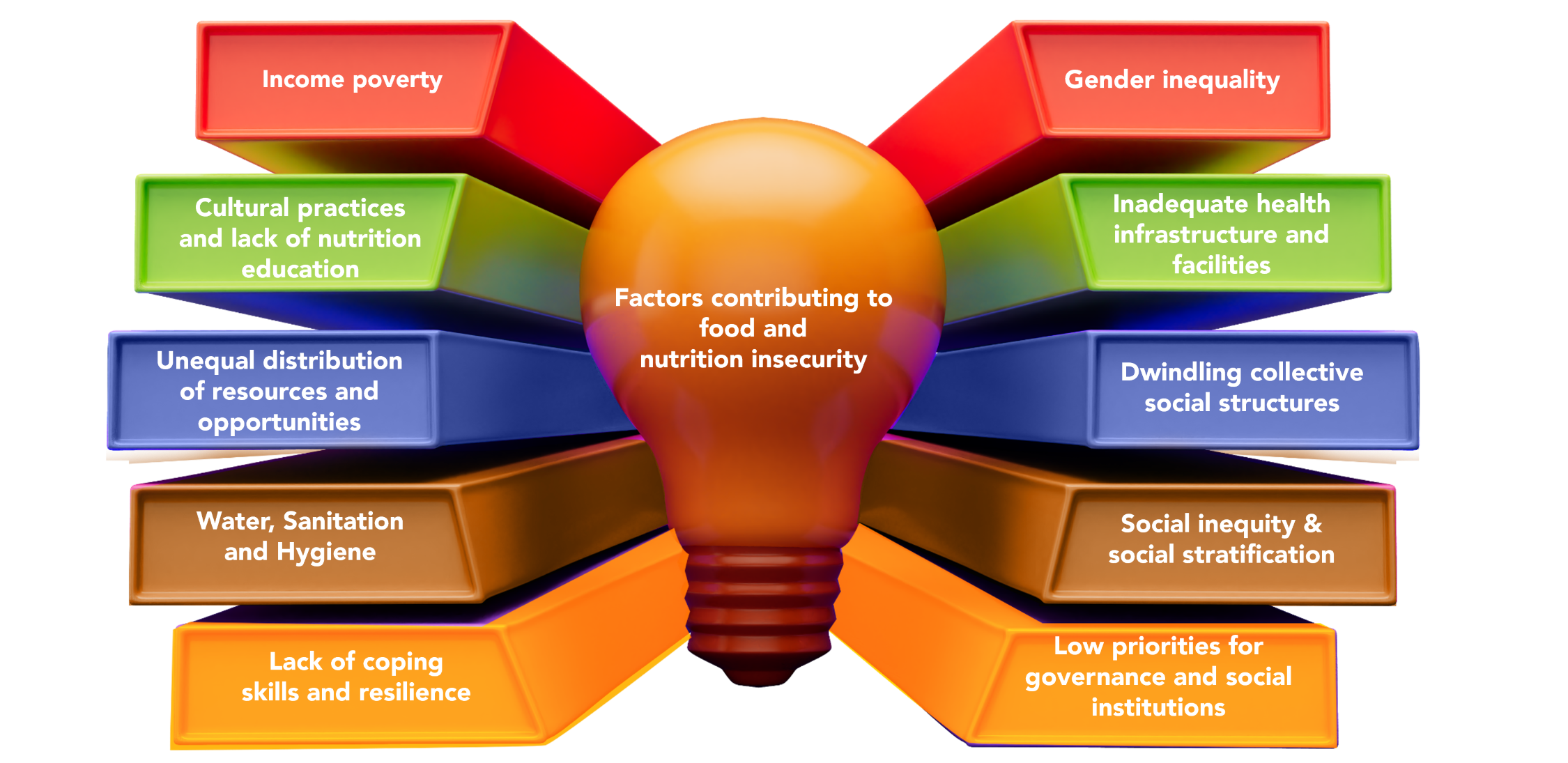
The interconnected factors contributing to food and nutrition insecurity in India
Our strategy recognizes that these challenges are interconnected and must be addressed through integrated, community-led approaches.
Looking Ahead: Scaling with Purpose
As we look ahead to the remainder of the strategy period, our focus is on deepening and scaling impact:
Expanding outreach across rural and urban communities.
Strengthening community institutions and local leadership.
Enhancing partnerships with government, corporates, and civil society.
Continuing to build a strong movement around food and nutrition.
Alongside programmatic work, we are also strengthening our field capacity, data systems, and partnerships to support sustained and measurable outcomes.
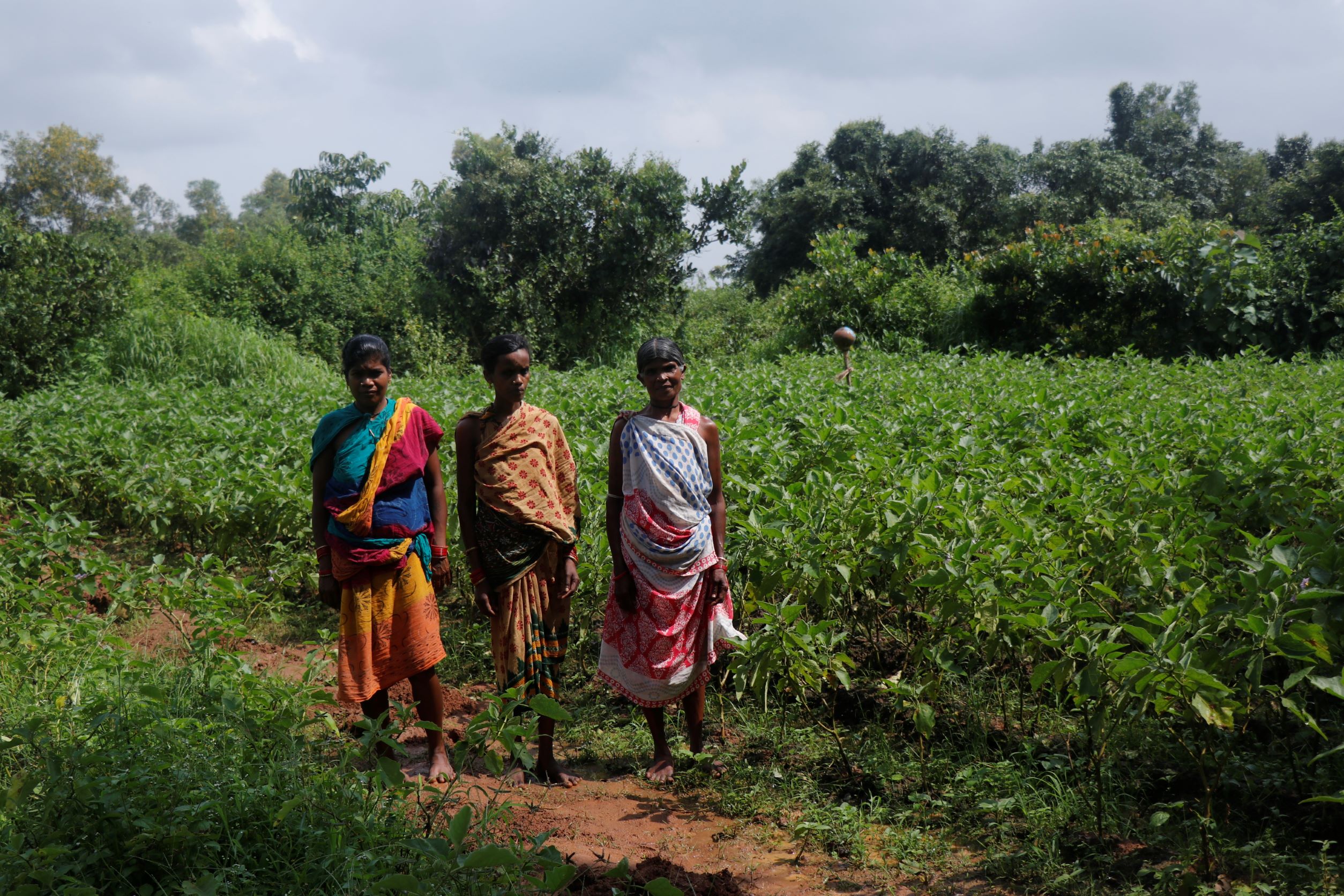
Rural women leading the way toward community-driven food security
Why This Journey Matters
The journey toward a hunger-free India is complex, but it is also full of possibility. We see that when communities have:
The agency to take decisions, and
The resilience to withstand and adapt,
they can create lasting change that goes far beyond any single intervention.
Moving Forward — Together
Our strategy is not a fixed roadmap. It is a living framework, shaped by learning, partnerships, and the realities of the communities we serve. As we continue this journey, we remain committed to:
Strengthening agency
Building resilience
Working collaboratively to drive sustainable food and nutrition security
We thank all our volunteers, partners, donors, supporters, community workers, and well-wishers who are making all this happen.
Together, we can rise for resilience.
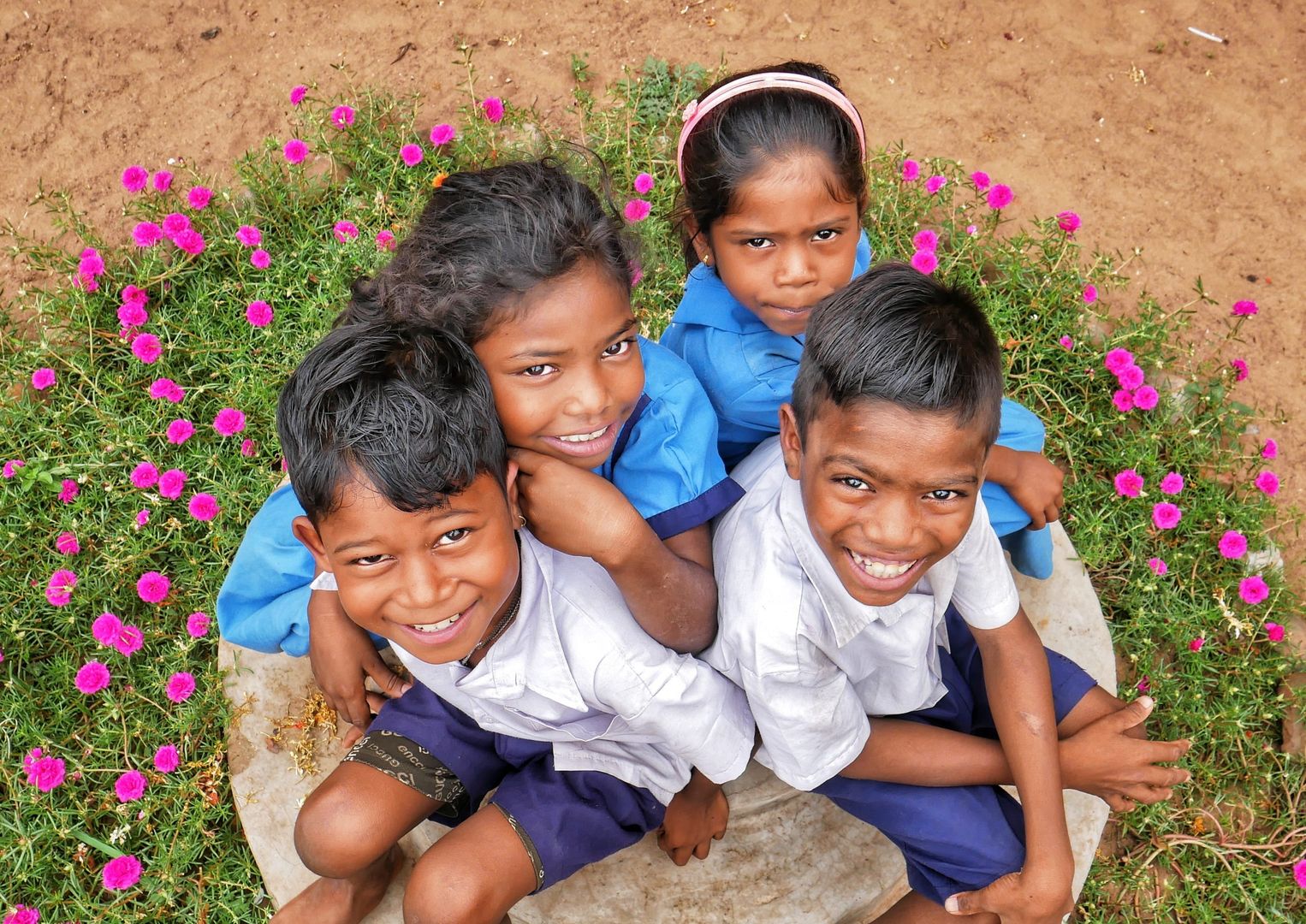
The smiles that inspire us — every meal, every program, every step forward is for them
Country Strategy Plan Resilience Agency Community Development Food Security CSP 2025-2028
Importance of Maternal Nutrition for India's Future
India has made significant progress in improving maternal and child health, yet 53% of women aged 15–49 remain anaemic. Improving maternal nutrition is not just about supporting one pregnancy — it is about transforming the health and wellbeing of future generations.
Thought LeadershipPartnershipsJun 2026
Nutrition Every Day Podcast Returns with Season 2: Deepening India’s Nutrition Conversation
The #EverydayNutrition podcast is back with Season 2 — expanding the conversation across maternal health, food systems, consumer awareness, and emerging nutrition challenges. A collaboration between Rise Against Hunger India and The Good Sight Webzine & Podcast.
Thought LeadershipAug 2025
Everyday Nutrition Podcast Series
Rise Against Hunger India in collaboration with The Good Sight Webzine and Podcast is doing a podcast series titled Everyday Nutrition. The blog lists down some of the episodes.
Thought LeadershipJun 2022
How Hunger Kills - Effects of Chronic Hunger
This guest blog explains how chronic hunger affects functioning of human body and impedes mental acuity which can have intergenerational implications.